Plastics With Embedded Enzymes Break Down Quickly in Sea Water
⏮ BeforeMost plastics persist in marine environments for long periods.
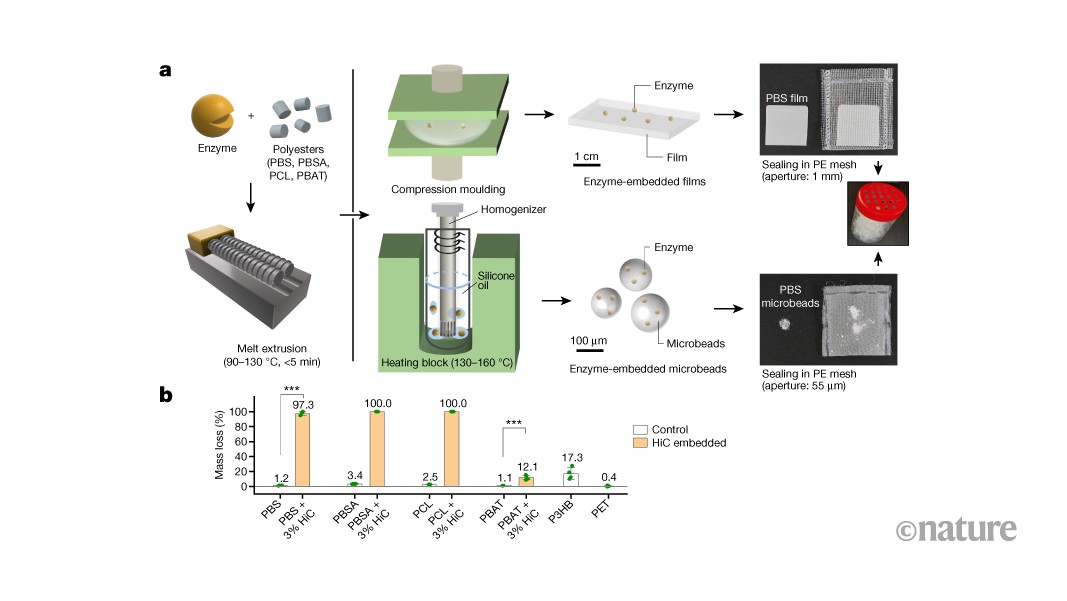
✅ NowEnzyme-embedded polyesters degraded readily in tests across marine sites, according to the research.
In short
- Enzymes embedded in compostable polyesters enabled rapid, complete biodegradation.
- The method worked even in environments with few microbes.
- It was effective at marine sites ranging from coastal sea water to the deep sea.
Why the Good News Desk likes this one
Plastic pollution in the sea persists because few microbes can break it down there. This approach carries its own enzymes into the material, so breakdown does not depend on local microbes. The source reports the effect at several marine sites, though it does not describe large-scale use.
Advertisement
From Nature
Nature, Published online: 21 October 2026; doi:10.1038/d41586-026-03282-x Embedding enzymes that break down ester bonds into compostable polyesters enables rapid and complete biodegradation even in microbe-scarce environments. This method is effective in marine sites ranging from coastal sea water to the deep sea, and could therefore contribute towards solving the global plastic pollution problem.
Ask this story
More like this


Advertisement